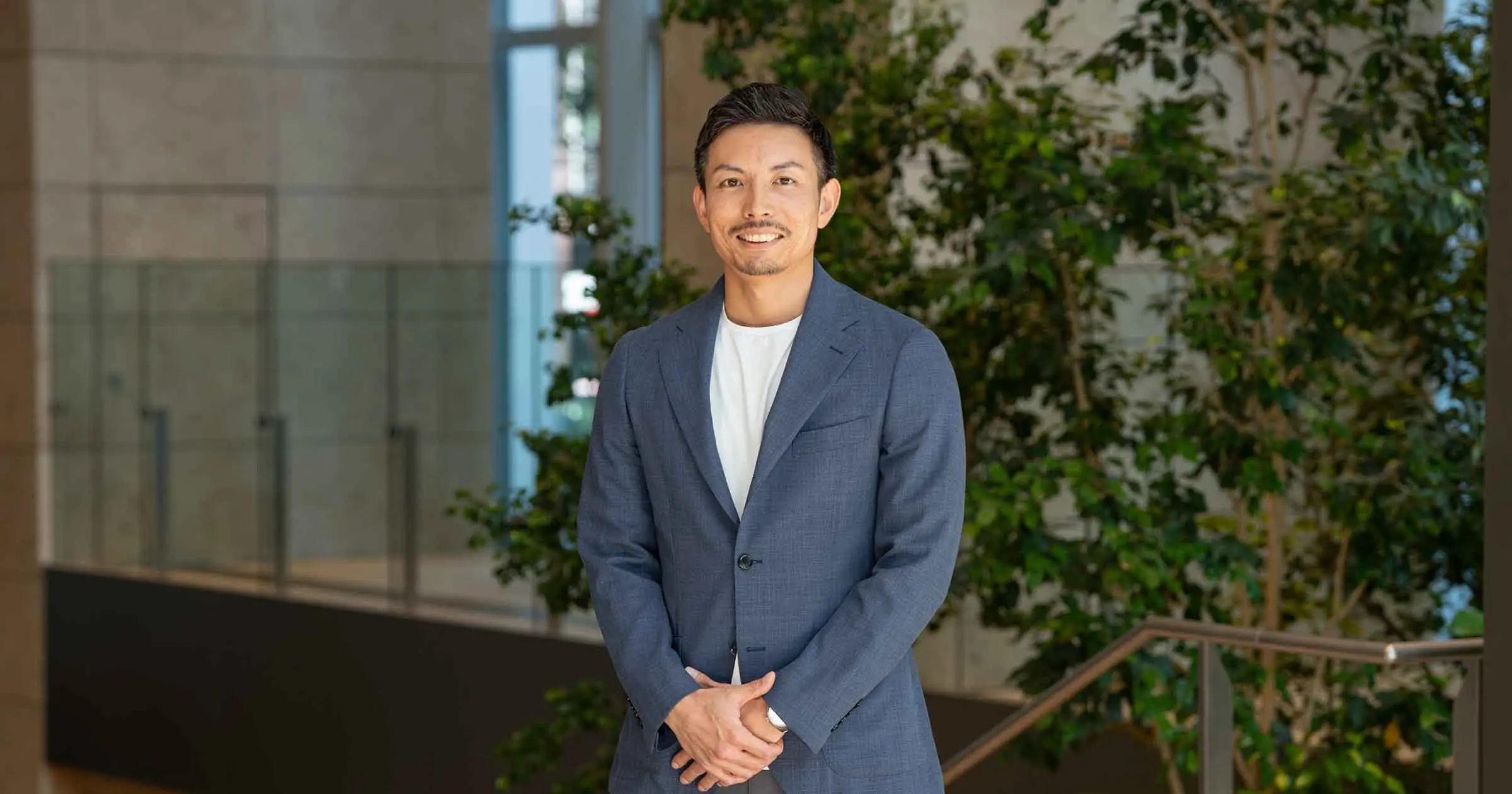
K.B
Technical Division
Joined the company in January 2024 after building a career at a Japanese construction machinery manufacturer, a global wind turbine manufacturer, and an overseas renewable energy company. Baba has expertise spanning the entire lifecycle of wind power business operations. He currently works on business development, construction execution, and operation management of wind power generation projects both in Japan and overseas.
“I would like to contribute to achieving net zero emissions by 2050 through my professional life.” With this clear goal in mind, Baba built his career with a singular focus on wind power industry. Having experienced all phases of wind power projects—from technical work at a manufacturer to project development at an operating company—Baba chose Mitsui & Co. Power & Infrastructure Development Ltd. as his next stage. Why? He spoke about the strengths of the Mitsui Group that he discovered during his 1.5 years there, as well as the untapped potential of offshore wind energy in Japan.
“I would like to take on challenges at the forefront of the renewable energy business for 2050.”
I have one big goal. That is, to contribute to achieving net zero emissions by 2050 through my own professional life. I formed this ambition when the Government of Japan set the carbon neutrality goal in 2020. At that time, I was working for a global wind turbine manufacturer. There, I witnessed firsthand the irreversible mega-trend driving the shift to renewable energy, which was transforming the entire industry. Since then, I resolved to dedicate my professional life to contributing to solutions of environmental challenges.
Mitsui & Co. Power & Infrastructure Development Ltd. is an organization that supports the project and infrastructure development initiatives undertaken by Mitsui. It has a vast business portfolio, operates across many regions, including overseas markets, and undertakes large-scale projects. I was confident that I could take on significant challenges in this business environment, and I decided to change my career.
The lifecycle of a wind project is extremely long. The business period covers about ten years from development to the start of operation, after which wind power plant continues to operate for an additional 20 to 30 years. The reality is that there is a shortage of personnel with sufficient experience and skills to cover this entire period. Because of my unique career path—experiencing the construction stage at a wind turbine manufacturer, project development at a renewable energy developer, and then observing projects from a shareholder’s perspective—I feel I am well-positioned to demonstrate my value.
I am currently supporting multiple projects simultaneously. In particular, for the offshore wind project in Japan, I am partially seconded to the operating company to lead project development. My duties are diverse, ranging from obtaining permissions and approvals from the government, coordinating with stakeholders, including the fishery association, and contract coordination and negotiation with contractors and turbine manufacturers. It is also an important part of my role to report the necessary information to the Mitsui head office and provide them with the information required to support decision-making. I am also involved in projects at various phases, including those in the construction phase and those already in operation.
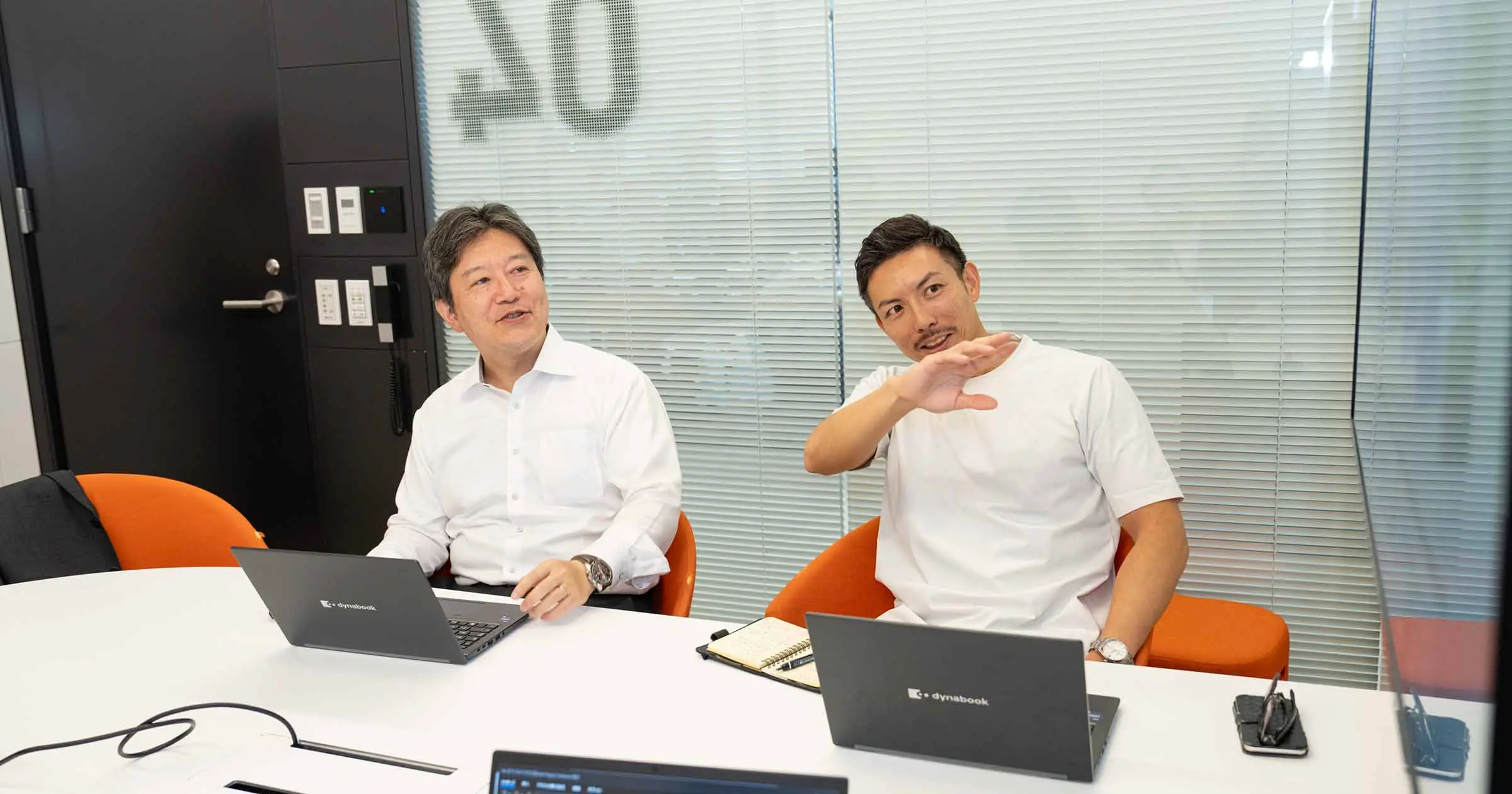
The coordination with the Mitsui head office, which I had been somewhat concerned about before joining the company, turned out to be closer than I had expected. While we are in the position of a group company, we are able to work closely as a team with the head office. I work with people from various departments on individual projects, and it seems to me that many personnel and departments are seamlessly integrated into operations.
The potential of offshore wind power to support energy self-sufficiency in Japan.
The reason I became so fascinated with wind power business in the first place was that it allowed me to make use of my foundation as a mechanical engineer and that it was relatively easy to scale as a business. In particular, offshore wind power generation can make effective use of Japan’s vast sea areas, which I believe is important from the perspective of ensuring energy self-sufficiency.
Japan has limited land area, which means there are only limited spaces available for installing onshore wind and solar power facilities. However, this is not the case with offshore wind power. Japan has the sixth-largest ocean area in the world, making it a mega-nation with vast ocean resources. If we are able to generate electricity using the space of the ocean, Japan could become a resource-producing nation capable of supplying its own energy, which is currently dependent on imported oil and natural gas. Currently, Japan’s wind power is falling behind the rest of the world. However, the Ministry of Economy, Trade and Industry has set clear targets for wind power deployment, and the industry is also supporting efforts to increase the share of renewable energy. I believe that wind power is definitely the solution to the energy problem that Japan is currently facing.
Flexible work styles and abundant opportunities for growth in a global environment.
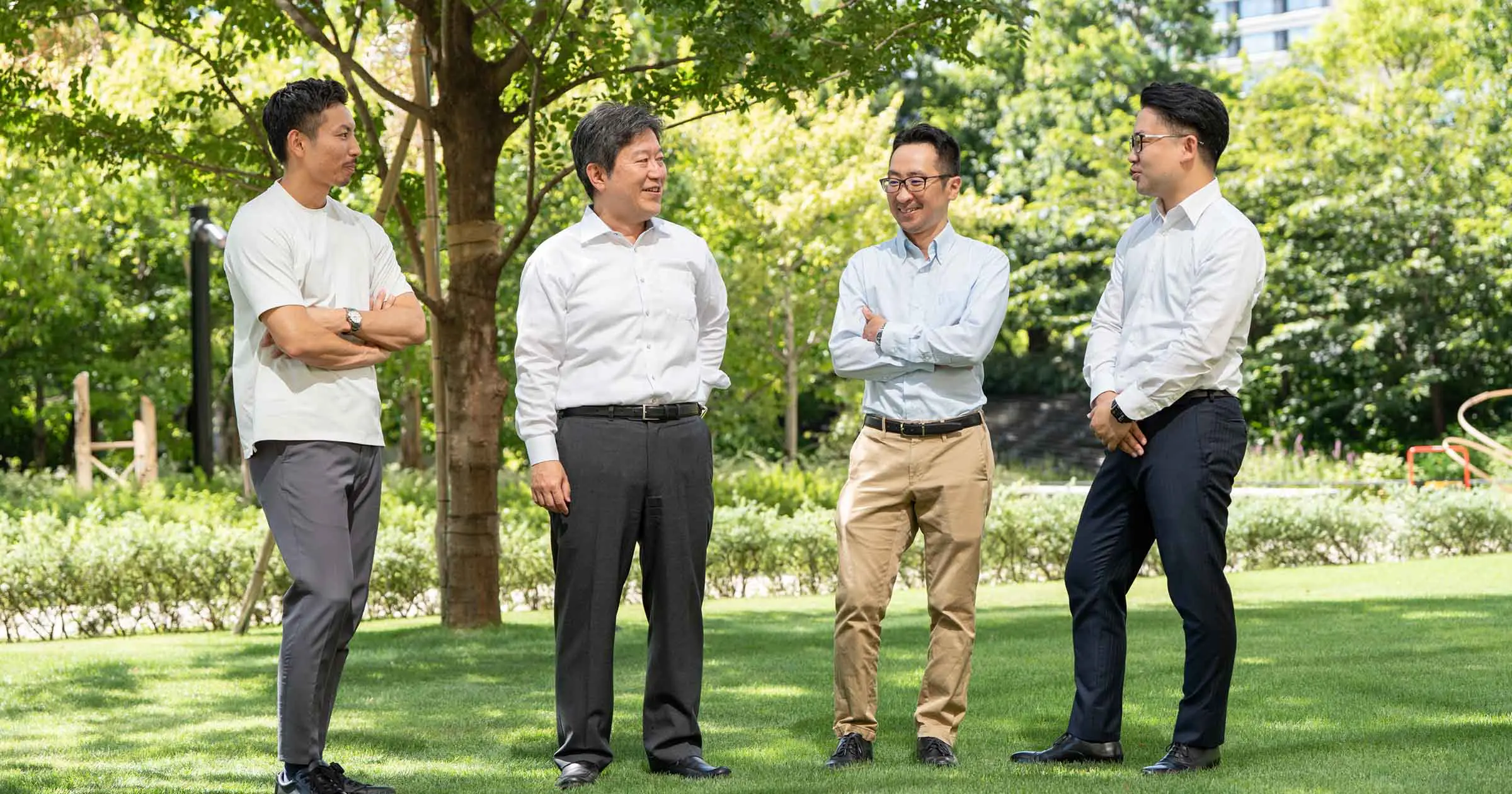
Teleworking and the flexible working hours system can be used as needed. I sometimes telework two days a week and spend the remaining days at the office. or at the operating company to which I am seconded.
I also have many opportunities to connect with overseas contacts. Some people go on business trips once or twice a month, depending on the projects, and multiple personnel from a single department are constantly on overseas assignments. I hope to have the opportunity to experience an overseas assignment one day. In the current offshore wind project in Japan, more than half of the people I work with come from various countries outside Japan.
I appreciate that the company offers many training programs, which is characteristic of Japanese companies. I actively take advantage of Mitsui’s internal training programs and completed about 20 different types of programs in one year. The company also supports employees in taking paid training outside the organization, if needed, so there are many opportunities to facilitate self-growth.
In addition, new projects arise one after another, so we have many opportunities to gain experience on-site. The basic principle of human resource development at Mitsui as I heard is as follows: “The individual builds the business, and the business cultivates the individual.” At the Mitsui Group, this principle is embedded in daily tasks in a way that employees can truly feel, which is very unique to this Group.
This industry is moving toward the clear goal of achieving carbon net zero by 2050. I believe that wind energy is an especially appealing job through which I can directly contribute to solving Japan’s energy problem. This is an extremely rewarding field, so I would like to work with people who share the same ambition.